Guides · 8 min read
How to find piano students
Start with the students you can teach well, make your available lessons easy to understand, and introduce yourself where those students might look. Then give each enquiry a clear next step.
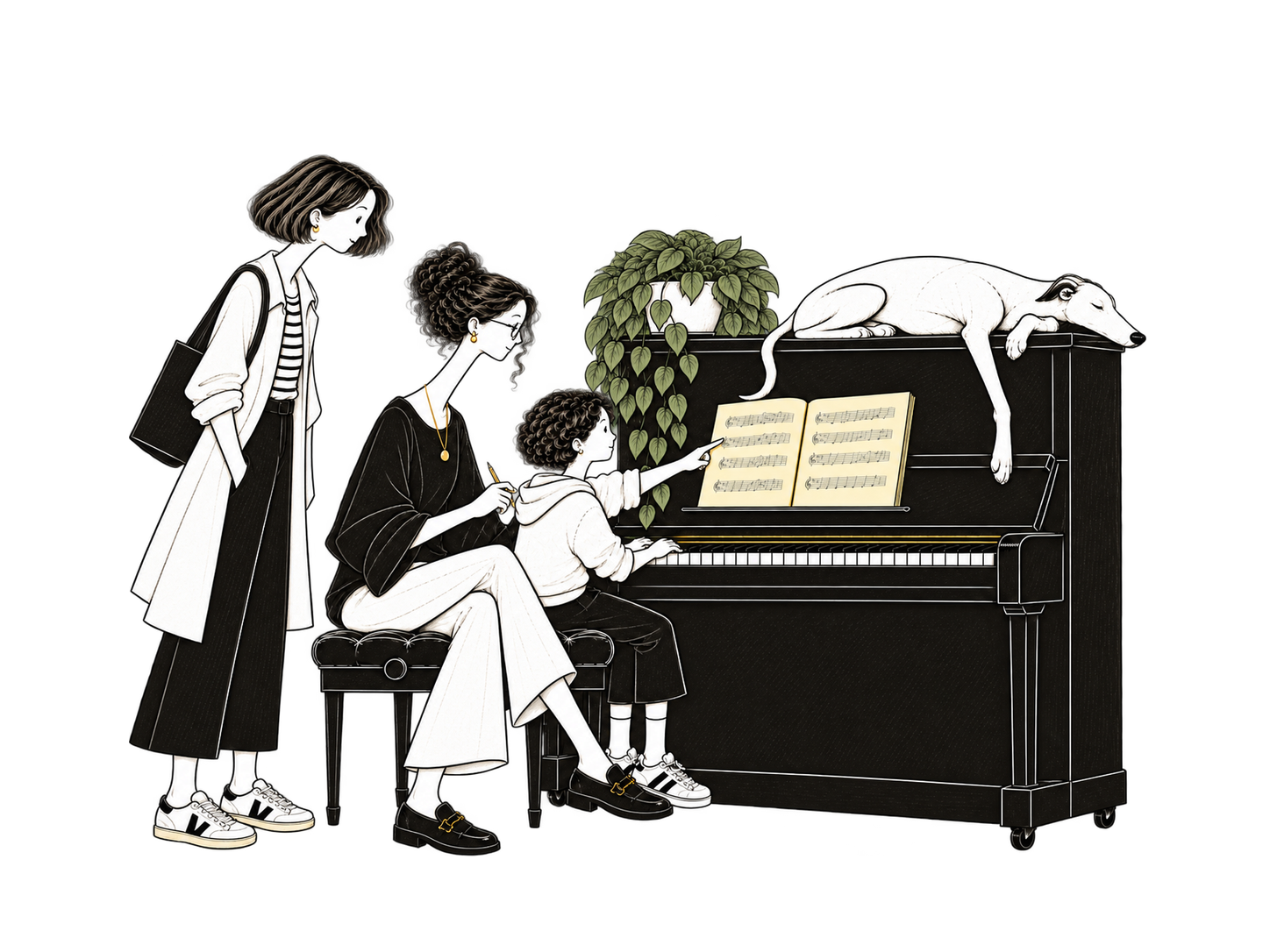
Advertise the lessons you can actually offer
Before looking for more piano students, decide which places in your teaching week you want to fill. A free morning, an after-school appointment and an online lesson are different offers.
Someone may want exactly the teaching you offer but be unable to attend at the time you have available. Give the lesson format, location, length and available times alongside the age groups and levels you teach. State the fee, or make it clear how to ask about it. That lets a prospective student decide whether a conversation is worthwhile.
Be precise about experience rather than making a broad promise. If you have taught adults returning to piano, explain what you can help them revisit. If you teach children taking their first lessons, describe how you introduce the instrument. Mention exam preparation only where it is part of your actual teaching.
The Independent Society of Musicians recommends considering the pupils you would like to teach and the places where you could reach them. Its guidance on growing a private teaching business includes adults, local groups and the choice between online and in-person lessons. The useful starting point is a real teaching offer, not a claim that you suit everyone.
Choose where to advertise piano lessons
Choose places that have a plausible connection with the students you want to teach. A local music shop is one option. The Musicians’ Union’s advice on finding teaching work specifically suggests asking whether you can leave promotional material on a music shop noticeboard.
For adult students, consider community groups, choirs or venues you already know. Ask the organiser whether sharing your lesson details would be appropriate. For children, approach a school’s music department through its normal contact channel and ask whether it accepts information from local private teachers. An introduction is a request, not permission to contact pupils or families directly.
If you use an online community group, read its posting rules first. Give enough practical information for someone to judge the lessons, then provide a straightforward way to contact you. Repeating the same advertisement in every group is not a substitute for choosing a relevant audience.
A teacher directory is another route to investigate. The Musicians’ Union offers its members a searchable Find a Musician directory, described in the same guidance. Check the membership requirements, any costs and how prospective students search before spending time or money on a listing. No directory or advertisement guarantees enquiries.
Give people enough information to recommend you
Tell people who know your teaching that you have space, and be specific about which lessons are available. A parent cannot pass on an afternoon appointment you no longer offer. A colleague cannot recommend you for adult beginners if they only know your work with children.
Choose a few local teachers whose work connects with yours. If you teach adult beginners, introduce yourself to piano teachers who mainly prepare advanced students for exams. If you teach children, a singing or violin teacher may hear from a family looking for piano lessons too. Explain your teaching interests and available times, and ask about theirs. An introduction gives them useful information, not an obligation to recommend you.
If a current student wants to recommend you, make it easy for them to share your public contact details. Let the prospective student approach you themselves. There is no need to ask for a friend’s private phone number or to turn a lesson into a request for introductions.
The aim is an accurate recommendation. Someone should be able to explain who you teach and where the lessons happen, without promising that you will get a child through an exam or make an adult confident within a fixed number of weeks.
Explain your teaching with concrete detail
A description of what you teach is more informative than a string of compliments about your lessons. Explain whether students learn to read music, play by ear, improvise or work towards performances, where those activities genuinely belong in your teaching. Say how you discuss their musical interests and choose an appropriate starting point.
Use your own demonstrations if you want to show a teaching idea publicly. You could explain how you approach a passage hands separately, or how you help a returning player choose something manageable. The purpose is to make your teaching understandable, not to imply that one approach works for every student.
Keep private student notes separate from promotional material. You can explain how you teach without reproducing a child’s record, sharing a family’s messages or inventing a success story. A description grounded in your own work gives a prospective student something meaningful to ask about.
Make the first conversation useful
When someone contacts you, answer their question before asking them to book. They may need to know whether you teach their age group, travel to their area or have a suitable time.
Establish who the lessons are for, what experience they have and what they would like to play. Ask about their instrument and the times they can attend. You need enough information to decide whether you can help, not an exhaustive account of their musical history.
For a child, speak with the parent or guardian arranging the lessons. Explain what the first lesson involves, what they should bring and what it costs. Our guide to the first piano lesson explores that meeting in more detail.
Offer an actual appointment if the lessons seem suitable, and make clear whether it is a single introductory lesson or the beginning of regular tuition. Do not imply that a space is disappearing unless that is genuinely the case. If you cannot meet their needs, say so rather than promising an arrangement you cannot maintain.
If someone has asked for details and then gone quiet, a brief follow-up can clarify whether they still want the appointment. Leave them room to decline. An unanswered enquiry is not evidence that your teaching or price needs changing.
Review enquiries before buying more advertising
Keep a simple record of where enquiries came from and what happened next. You can do this in a notebook. Distinguish a question about fees, a first lesson arranged and a student choosing to continue. They are different outcomes.
Consider an imagined example: a teacher receives several enquiries from a community notice, but every person needs evening lessons and the teacher only has mornings available. The notice has reached interested people. The mismatch is availability, so increasing the advertising budget would not resolve it.
Ask new students how they heard about you, without assuming that the last place they saw your name did all the work. Someone might receive a recommendation and then check your directory listing. Use that information to choose where to keep your details up to date.
Before paying for an advertisement, decide what you can afford to spend and how you will judge the response. Look at suitable enquiries and lessons actually arranged, not only views or clicks. Keep the trial limited enough that an unsuccessful result does not put pressure on your teaching income.
Be ready when a student starts
Finding a student and organising their lessons are separate jobs. Once someone decides to start, agree the date, time, place and fee directly with them, then record the appointment. After the lesson, record what you covered and what you want to revisit. A short factual note gives the next lesson a specific starting point.
Another Session keeps student records, scheduled lessons, session notes, packages and payment tracking together. The picture below is a real app capture using a fictional music student. It shows the student record you can return to as their lessons continue.
See Another Session for music teachers for the full teaching workflow. If you are deciding whether to use software at all, our guide to software for a small music-teaching studio explains which recurring jobs are worth testing.
Every feature is free for up to three clients, with no card and no time limit. Complete has unlimited clients with exactly the same features. Every account starts with 30 days of unlimited clients, no card required. You can start free or check pricing before deciding.

Frequently asked questions
How do I find my first piano students?
Begin with the lessons you can offer: who you teach, where, when and at what fee. Tell people who know your work that you have space, and investigate relevant local groups, music-shop notices or teacher directories. Give interested students a clear way to contact you and arrange a first lesson. None of these routes guarantees bookings.
Where can I advertise piano lessons locally?
Options to investigate include music-shop noticeboards, community groups and teacher directories. Ask permission before leaving material or posting, and check any listing costs. Choose places connected with the age groups and locations you teach, rather than assuming every local audience is suitable.
How can I find adult piano students?
Make adult teaching explicit in your lesson details. Explain whether you work with complete beginners, returning players or more experienced musicians, and give the available times. Consider relevant local groups or venues and ask whether sharing your details would be appropriate.
Do I need paid advertising to get piano students?
Paid advertising is an option, not a requirement. You can first investigate introductions, permitted community notices and suitable directories. If you do pay for advertising, set a spending limit and judge the response by suitable enquiries and arranged lessons rather than views alone.
Can Another Session help me organise new students?
Yes. It brings student records, scheduled lessons, session notes, packages and payment tracking together. See how music teachers use Another Session. Every feature is free for up to three clients, with no card and no time limit.
Related pages
Run your coaching, calmly
One calm place for clients, sessions, notes and payments. Free for up to three clients, no card needed.
Free for up to three clients. No card required.